For restaurant owners and food service operators in the Inland Empire, a grease trap is one of those behind-the-scenes systems that doesn’t get much attention — until it fails. When it does, the consequences can be swift and serious. From health code violations to temporary closures, grease trap problems have a way of becoming very expensive very fast. Understanding what causes failures and how to prevent them is essential for any food service business that wants to stay operational.
What a Grease Trap Actually Does
Grease traps are designed to intercept fats, oils, and grease — commonly referred to as FOG — before they enter the municipal sewer system. In a busy commercial kitchen, significant amounts of FOG are produced daily through cooking, dishwashing, and food prep. Without a properly functioning grease trap, that material flows directly into the sewer lines, where it cools, solidifies, and accumulates into blockages that can affect not just your business but the surrounding infrastructure.
Common Causes of Grease Trap Failures
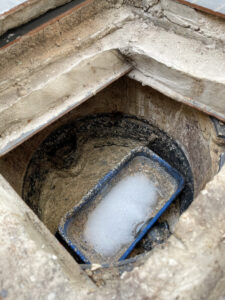
The most frequent cause of grease trap failure is simple neglect. Grease traps need to be pumped and cleaned on a regular schedule — how often depends on the size of the trap and the volume of your kitchen output. When cleaning is delayed, the trap fills beyond capacity and loses its ability to separate FOG from wastewater. The result is grease passing through into the sewer line, which can cause backups, foul odors, and regulatory violations.
Other causes include using the wrong size trap for the volume of the operation, damage to internal components, and the use of chemical additives that liquefy grease temporarily without actually removing it from the system. These additives push the problem downstream rather than solving it, and many municipalities explicitly prohibit their use.
The Regulatory Stakes
Health departments and municipal sewer authorities take grease trap compliance seriously. Inland Empire restaurants are subject to local pretreatment regulations that require grease traps to be properly maintained and serviced by licensed professionals. Violations can result in fines, mandatory inspections, and in serious cases, forced closure until the issue is resolved. Maintaining documentation of your service history is also typically required and can be requested during an inspection at any time.
Signs Your Grease Trap Needs Attention
Slow drains in your kitchen, gurgling sounds from floor drains, and persistent foul odors are all indicators that your grease trap may be approaching or past capacity. Grease or sewage backing up into sinks or floor drains is a more urgent warning sign that requires immediate service. Waiting until these symptoms appear to schedule maintenance puts your operation at unnecessary risk.
Staying Ahead of the Problem
The most effective way to avoid grease trap failures is a consistent maintenance schedule supported by professional service. A licensed plumber can assess your current trap, determine the appropriate pumping frequency for your operation, and identify any issues with the system before they escalate.
At Lincoln Plumbing & Rooter, we provide grease trap services for restaurants and commercial kitchens throughout the Inland Empire. Our team understands the operational pressures food service businesses face and works efficiently to keep your kitchen running without unnecessary downtime.
Call (909) 780-0887 to schedule grease trap service with Lincoln Plumbing & Rooter today.

