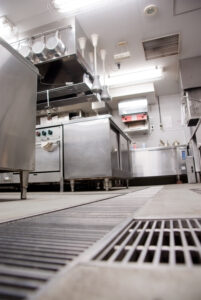
Floor drains are essential in commercial spaces—from restaurants and warehouses to retail stores and office buildings. They manage wastewater, capture runoff, and prevent standing water from creating safety hazards. When they work properly, they go unnoticed. But when they fail, even a small backup can bring operations to a halt. Understanding why these backups occur and how to prevent them is critical for protecting your facility. At Lincoln Plumbing & Rooter, we help commercial clients stay ahead of drain problems before they lead to downtime, damage, or costly repairs.
Why Floor Drains Play Such a Critical Role in Commercial Plumbing
Commercial properties see far greater water usage and foot traffic than residential homes. Floor drains often manage wastewater from cleaning, spills, restrooms, kitchens, and equipment rooms. They also help keep work areas compliant with sanitation and safety standards. When a floor drain starts to back up, it signals an issue somewhere in the drainage system that needs immediate attention—especially in businesses where cleanliness and safety are heavily regulated.
Common Causes of Floor Drain Backups
Several issues can lead to a commercial floor drain backing up. The most common include:
- Grease buildup in kitchens or food-service areas
- Accumulation of mop water debris, hair, dirt, and cleaning products
- Foreign objects accidentally flushed or washed down drains
- Pipe scale or corrosion in aging buildings
- Clogs or damage in the main sewer line
- Inadequate slope or improper drain installation
Because commercial buildings have complex plumbing networks, a blockage anywhere in the system can cause water to appear at the lowest drain points. That’s why a backup in one area often signals a problem far beyond the visible drain.
Grease and Organic Buildup: A Major Problem for Businesses
Restaurants, cafeterias, and commercial kitchens face extra challenges. Grease, fats, and oils may seem harmless when washed down a drain, but they cool quickly and harden inside the pipes. Over time, this buildup narrows the pipe interior and eventually causes a full blockage. When floor drains become the path of least resistance, wastewater has nowhere to go but back up onto the floor. Regular hydroscrubbing and grease-line maintenance from Lincoln Plumbing & Rooter helps prevent these costly interruptions.
The Hidden Threat of Sewer Line Issues
Backups in multiple floor drains, slow draining in restrooms, or gurgling noises can indicate a problem in the building’s main sewer line. Commercial sewer lines may clog due to tree roots, collapsed pipe sections, or accumulated debris from years of heavy use. A sewer line blockage is a serious issue because it affects the entire property. Immediate inspection is necessary to prevent raw sewage from entering work areas. At Lincoln Plumbing & Rooter, we use camera inspections and advanced tools to identify sewer line issues early and provide long-term solutions.
Why Preventive Maintenance Is Essential for Commercial Properties
Floor drain backups rarely appear suddenly. They usually develop gradually as buildup accumulates inside the pipes. Preventive maintenance, such as scheduled drain cleaning, camera inspections, and routine sewer line evaluations, keeps the system flowing as it should. For businesses that rely on strict sanitation—such as healthcare facilities, manufacturing plants, and food service establishments—prevention is far more cost-effective than emergency repairs.
Protect Your Business with Professional Drain Care
Whether your building has experienced a minor floor drain backup or signs of a deeper drainage issue, professional help is essential. A trained commercial plumber can pinpoint the cause quickly and restore safe conditions. If your business is dealing with backups, slow drains, or recurring plumbing issues, contact Lincoln Plumbing & Rooter at (909) 780-0887. We’ll work with you to eliminate the problem and help your plumbing system stay reliable, compliant, and ready for daily operations.

