If you’ve lived in the Inland Empire for any length of time, you’ve probably noticed the white crusty buildup around your faucets, the spots on your dishes, or the way soap never quite lathers the way it should. That’s hard water — and while it might seem like more of an annoyance than a serious problem, it can quietly take a toll on your home’s plumbing over time. Understanding what hard water does and how to address it can save you from costly repairs down the road.
What Makes Water “Hard”?
Hard water contains elevated levels of dissolved minerals, primarily calcium and magnesium. As water travels through the ground and into the municipal supply, it picks up these minerals along the way. The Inland Empire is known for having particularly hard water, which means the effects on your plumbing are more pronounced here than in many other parts of California.
How Hard Water Damages Your Plumbing
The most significant threat hard water poses is scale buildup, also called limescale. As hard water flows through your pipes, those dissolved minerals gradually deposit on the inner walls. Over time, these deposits narrow the diameter of your pipes, reducing water flow and putting added strain on your fixtures and appliances.
Water heaters are especially vulnerable. When scale accumulates inside the tank or around heating elements, the unit has to work harder to heat the same amount of water. This drives up energy costs and shortens the lifespan of the heater considerably.
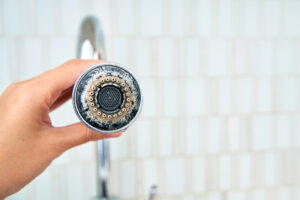
Hard water also wears down faucets, showerheads, and valves faster than soft water would. The mineral deposits degrade washers and seals, leading to drips and leaks that worsen if ignored. Even newer fixtures can show signs of wear within a few years if hard water goes unaddressed.
Signs Hard Water Is Affecting Your Home
Not sure if hard water is your culprit? Watch for these warning signs:
- White or yellowish scale deposits on faucets, showerheads, and around drains
- Reduced water pressure that wasn’t there before
- Appliances like dishwashers and washing machines running less efficiently
- Water heater making popping or rumbling sounds, which can indicate sediment buildup
- Soap scum that’s difficult to remove from tubs and shower walls
If you’re seeing several of these at once, your plumbing is likely feeling the effects of hard water.
What You Can Do About It
The most effective long-term solution is a whole-home water softener. These systems work by replacing calcium and magnesium ions with sodium ions through a process called ion exchange. Softened water is much gentler on pipes, fixtures, and appliances, and many homeowners notice a difference in water quality right away.
For homeowners who prefer to avoid sodium in their water, salt-free water conditioners are another option. While they don’t technically soften water in the traditional sense, they do prevent scale from adhering to pipe walls, which limits the buildup over time.
Beyond treatment systems, regular maintenance matters too. Having your water heater flushed annually removes sediment before it has a chance to cause damage. A plumber can also inspect your pipes and fixtures for signs of scale buildup and recommend targeted solutions if problems are already present.
Let Lincoln Plumbing & Rooter Help Protect Your Home’s Plumbing
Hard water is a fact of life in the Inland Empire, but the damage it causes doesn’t have to be. The team at Lincoln Plumbing & Rooter can assess your plumbing, help you explore water treatment options, and keep your system in top condition year-round. Call us today at (909) 780-0887 to schedule a service appointment.

